Schedules and rhythms get talked about like they're the same thing, but they're not — and the difference matters a lot once school lets out. A schedule is a list of times. A rhythm is a flow your family can feel, even on the days nothing goes as planned.
You don't need a color-coded chart taped to the fridge. You need three simple anchors: morning, midday, and evening.
Morning: set the emotional temperature
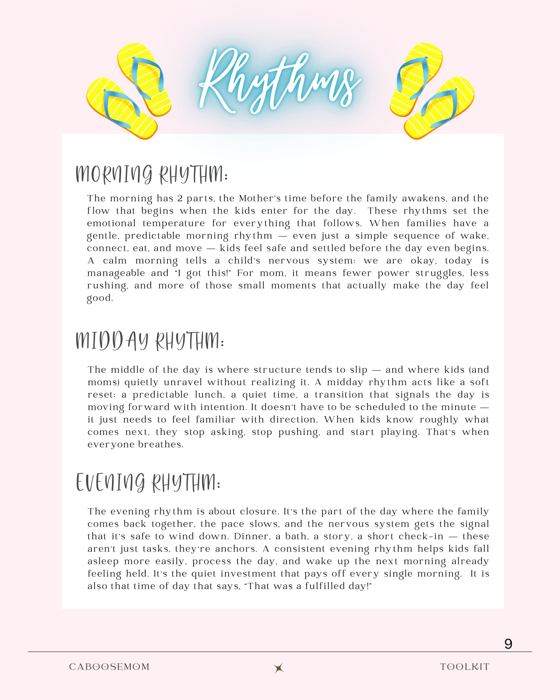
The morning has two parts — your time before the kids wake up, and the flow that follows once they're up. These two pieces set the emotional tone for everything that comes after. A calm, predictable morning rhythm doesn't need to be elaborate — even a simple sequence of wake, connect, eat, and move helps kids' nervous systems settle in before the day asks anything more of them.
On the days this feels hard to pull off, that's okay too. The goal isn't a flawless morning — it's fewer rushed, frantic ones.
Midday: hold the shape with intention
This is often where the day quietly unravels if there's no structure to lean on. A loose midday rhythm — a predictable lunch, a quiet rest or transition, then a stretch of time moving forward with intention — keeps kids (and moms) from needing the schedule down to the minute. They just need to feel which direction the day is heading. When kids know roughly what comes next, they stop asking, stop pushing, and start playing. That's when everyone breathes a little easier.
Evening: bring it back together
The evening rhythm is about closure. This is the part of the day where the family comes back together, the pace slows, and everyone's nervous system gets the signal that it's safe to wind down. A bath, a story, a short check-in — these aren't just routine, they're anchors. A consistent evening rhythm helps kids fall asleep more easily, process the day, and wake up the next morning already feeling fulfilled.
It's also that quiet investment that pays off every single morning — and the simple feeling, at the end of the day, of "that was a fulfilled day."
Gentle structure, not rigid rules
None of this requires a printed schedule or strict timing. It just requires three loose anchors your family can return to, even on the unpredictable days. That's the whole idea behind the Summer Rhythms section of the toolkit — flexible structure that brings calm, connection, and ease to your days, without one more thing to fail at.